


A lot of students wonder if there's a specific AP English reading list of books they should be reading to succeed on the AP Literature and Composition exam. While there's not an official College-Board AP reading list, there are books that will be more useful for you to read than others as you prepare for the exam. In this article, I'll break down why you need to read books to prepare, how many you should plan on reading, and what you should read—including poetry.
Quick Answer: What Books Should You Read for AP Literature?
There is no official AP Literature reading list from the College Board. Instead, the best AP Literature books are novels, plays, and poetry collections with strong literary merit that help you practice close reading and literary analysis. For the AP Literature exam, you should:
- Read 4–5 major works deeply so you can write about them on the free-response essay.
- Read a wide variety of classic and modern literature to become comfortable analyzing different writing styles, time periods, and genres.
- Include novels, plays, and poetry in your reading, not just novels.
Popular AP Literature books include works by Shakespeare, Jane Austen, Toni Morrison, Emily Brontë, F. Scott Fitzgerald, Mary Shelley, Chinua Achebe, Margaret Atwood, Kazuo Ishiguro, and Khaled Hosseini, among many others. The complete reading list below organizes recommended books by literary period to help you choose titles that are most useful for AP Lit preparation.
Why Do You Need to Read Books for the AP Literature Test?
This might seem like kind of an obvious question—you need to read books because it's a literature exam! But actually, there are three specific reasons why you need to read novels, poems, and plays in preparation for the AP Lit Test.
To Increase Your Familiarity With Different Eras and Genres of Literature
Reading a diverse array of novels, poetry and plays from different eras and genres will help you be familiar with the language that appears in the various passages on the AP Lit exam's multiple choice and essay sections. If you read primarily modern works, for example, you may stumble through analyzing a Shakespeare sonnet. So, having a basic familiarity level with the language of a broad variety of literary works will help keep you from floundering in confusion on test day because you're seeing a work unlike anything you've ever read.
To Improve Your Close-Reading Skills
You'll also want to read to improve your close-reading and rhetorical analysis skills. When you do read, really engage with the text: think about what the author's doing to construct the novel/poem/play/etc., what literary techniques and motifs are being deployed, and what major themes are at play. You don't necessarily need to drill down to the same degree on every text, but you should always be thinking, "Why did the author write this piece this way?"
For the Student Choice Free-Response Question
Perhaps the most critical piece in reading to prepare for the AP Lit test, however, is for the student choice free-response question. For the third question on the second exam section, you'll be asked to examine how a specific theme works in one novel or play that you choose. The College Board does provide an example list of works, but you can choose any work you like just so long as it has adequate "literary merit." However, you need to be closely familiar with more than one work so that you can be prepared for whatever theme the College Board throws at you!

Note: Not an effective reading method.
How Many Books Do You Need to Read for the AP Exam?
That depends. In terms of reading to increase your familiarity with literature from different eras and genres and to improve your close-reading skills, the more books you have time to read, the better. You'll want to read them all with an eye for comprehension and basic analysis, but you don't necessarily need to focus equally on every book you read.
For the purposes of the student choice question, however, you'll want to read books more closely, so that you could write a detailed, convincing analytical essay about any of their themes. So you should know the plot, characters, themes, and major literary devices or motifs used inside and out. Since you won't know what theme you'll be asked to write about in advance, you'll need to be prepared to write a student choice question on more than just one book.
Of the books you read for prep both in and out of class, choose four to five books that are thematically diverse to learn especially well in preparation for the exam. You may want to read these more than once, and you certainly want to take detailed notes on everything that's going on in those books to help you remember key points and themes. Discussing them with a friend or mentor who has also read the book will help you generate ideas on what's most interesting or intriguing about the work and how its themes operate in the text.
You may be doing some of these activities anyways for books you are assigned to read for class, and those books might be solid choices if you want to be as efficient as possible. Books you write essays about for school are also great choices to include in your four to five book stable since you will be becoming super-familiar with them for the writing you do in class anyways.
In answer to the question, then, of how many books you need to read for the AP Lit exam: you need to know four to five inside and out, and beyond that, the more the better!

Know the books. Love the books.
What Books Do You Need to Read for the AP Exam?
The most important thing for the student choice free-response question is that the work you select needs to have "literary merit." What does this mean? In the context of the College Board, this means you should stick with works of literary fiction. So in general, avoid mysteries, fantasies, romance novels, and so on.
If you're looking for ideas, authors and works that have won prestigious prizes like the Pulitzer, Man Booker, the National Book Award, and so on are good choices. Anything you read specifically for your AP literature class is a good choice, too. If you aren't sure if a particular work has the kind of literary merit the College Board is looking for, ask your AP teacher.
When creating your own AP Literature reading list for the student choice free-response, try to pick works that are diverse in author, setting, genre, and theme. This will maximize your ability to comprehensively answer a student choice question about pretty much anything with one of the works you've focused on.
So, I might, for example, choose:
-
A Midsummer Night's Dream, Shakespeare, play, 1605
-
Major themes and devices: magic, dreams, transformation, foolishness, man vs. woman, play-within-a-play
-
-
Wuthering Heights, Emily Bronte, novel, 1847
-
Major themes and devices: destructive love, exile, social and economic class, suffering and passion, vengeance and violence, unreliable narrator, frame narrative, family dysfunction, intergenerational narratives.
-
-
The Age of Innocence, Edith Wharton, novel, 1920
-
Major themes and devices: Tradition and duty, personal freedom, hypocrisy, irony, social class, family, "maintaining appearances", honor
-
-
Wide Sargasso Sea, Jean Rhys, novel, 1966
-
Major themes and devices: slavery, race, magic, madness, wildness, civilization vs. chaos, imperialism, gender
-
As you can see, while there is some thematic overlap in my chosen works, they also cover a broad swathe of themes. They are also all very different in style (although you'll just have to take my word on that one unless you go look at all of them yourself), and they span a range of time periods and genres as well.
However, while there's not necessarily a specific, mandated AP Literature reading list, there are books that come up again and again on the suggestion lists for student choice free-response questions. When a book comes up over and over again on exams, this suggests both that it's thematically rich, so you can use it to answer lots of different kinds of questions, and that the College Board sees a lot of value in the work.
To that end, I've assembled a list, separated by time period, of all the books that have appeared on the suggested works list for student choice free-response questions at least twice since 2003. While you certainly shouldn't be aiming to read all of these books (there's way too many for that!), these are all solid choices for the student choice essay. Other books by authors from this list are also going to be strong choices. It's likely that some of your class reading will overlap with this list, too.
I've divided up the works into chunks by time period. In addition to title, each entry includes the author, whether the work is a novel, play, or something else, and when it was first published or performed. Works are alphabetical by author.
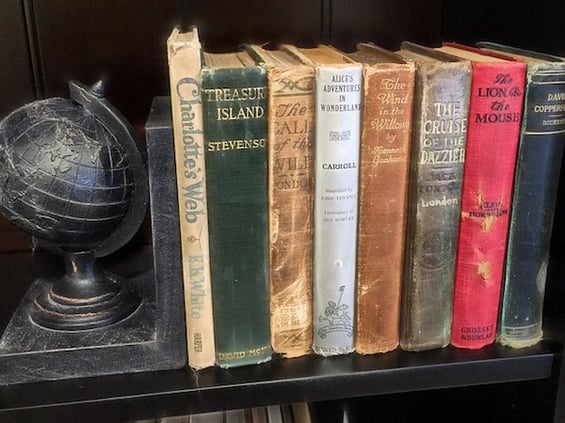
Warning: Not all works pictured included in AP Literature reading list below.

Ancient Works
|
Title
|
Author
|
Genre
|
Date
|
|
Medea
|
Euripides
|
play
|
431 BC
|
|
The Odyssey
|
Homer
|
epic poem
|
(no date)
|
|
Antigone
|
Sophocles
|
play
|
441 BC
|
|
Oedipus Rex
|
Sophocles
|
play
|
429 BC
|
1500-1799
|
Title
|
Author
|
Genre
|
Date
|
|
Don Quixote
|
Miguel de Cervantes
|
novel
|
1605
|
|
Tom Jones
|
Henry Fielding
|
novel
|
1749
|
|
As You Like It
|
Shakespeare
|
play
|
1623
|
|
Julius Caesar
|
Shakespeare
|
play
|
1599
|
|
King Lear
|
Shakespeare
|
play
|
1606
|
|
A Midsummer Night's Dream
|
Shakespeare
|
play
|
1605
|
|
The Merchant of Venice
|
Shakespeare
|
play
|
1605
|
|
Othello
|
Shakespeare
|
play
|
1604
|
|
The Tempest
|
Shakespeare
|
play
|
1611
|
|
Candide
|
Voltaire
|
novel
|
1759
|
1800-1899
|
Title
|
Author
|
Genre
|
Date
|
|
Emma
|
Jane Austen
|
novel
|
1815
|
|
Mansfield Park
|
Jane Austen
|
novel
|
1814
|
|
Pride and Prejudice
|
Jane Austen
|
novel
|
1813
|
|
Jane Eyre
|
Charlotte Bronte
|
novel
|
1847
|
|
Wuthering Heights
|
Emily Bronte
|
novel
|
1847
|
|
The Awakening
|
Kate Chopin
|
novel
|
1899
|
|
The Red Badge of Courage
|
Stephen Crane
|
novel
|
1895
|
|
Bleak House
|
Charles Dickens
|
novel
|
1853
|
|
David Copperfield
|
Charles Dickens
|
novel
|
1850
|
|
Great Expectations
|
Charles Dickens
|
novel
|
1861
|
|
Oliver Twist
|
Charles Dickens
|
novel
|
1837
|
|
A Tale of Two Cities
|
Charles Dickens
|
novel
|
1859
|
|
Crime and Punishment
|
Fyodor Dostoyevsky
|
novel
|
1866
|
|
Madame Bovary
|
Gustave Flaubert
|
novel
|
1856
|
|
Jude the Obscure
|
Thomas Hardy
|
novel
|
1895
|
|
The Mayor of Casterbridge
|
Thomas Hardy
|
novel
|
1886
|
|
Tess of the d'Urbervilles
|
Thomas Hardy
|
novel
|
1891
|
|
The Scarlet Letter
|
Nathaniel Hawthorne
|
novel
|
1850
|
|
A Doll's House
|
Henrik Ibsen
|
play
|
1879
|
|
The American
|
Henry James
|
novel
|
1877
|
|
The Portrait of a Lady
|
Henry James
|
novel
|
1881
|
|
Moby-Dick
|
Herman Melville
|
novel
|
1851
|
|
Frankenstein
|
Mary Shelley
|
novel
|
1818
|
|
Anna Karenina
|
Leo Tolstoy
|
novel
|
1877
|
|
Adventures of Huckleberry Finn
|
Mark Twain
|
novel
|
1885
|

The Queen of AP Literature surveys her kingdom.
1900-1939
|
Title
|
Author
|
Genre
|
Date
|
|
My Ántonia
|
Willa Cather
|
novel
|
1918
|
|
The Cherry Orchard
|
Anton Chekhov
|
play
|
1904
|
|
Heart of Darkness
|
Joseph Conrad
|
novel
|
1902
|
|
Sister Carrie
|
Theodore Dreiser
|
novel
|
1900
|
|
Murder in the Cathedral
|
T.S. Eliot
|
play
|
1935
|
|
Absalom, Absalom!
|
William Faulkner
|
novel
|
1936
|
|
As I Lay Dying
|
William Faulkner
|
novel
|
1930
|
|
Light in August
|
William Faulkner
|
novel
|
1932
|
|
The Sound and the Fury
|
William Faulkner
|
novel
|
1929
|
|
The Great Gatsby
|
F. Scott Fitzgerald
|
novel
|
1925
|
|
A Passage to India
|
E.M. Forster
|
novel
|
1924
|
|
The Little Foxes
|
Lillian Hellman
|
play
|
1939
|
|
Their Eyes Were Watching God
|
Zora Neale Hurston
|
novel
|
1937
|
|
Brave New World
|
Aldous Huxley
|
novel
|
1931
|
|
A Portrait of the Artist as a Young Man
|
James Joyce
|
novel
|
1916
|
|
Billy Budd
|
Herman Melville
|
novel
|
1924
|
|
Major Barbara
|
George Bernard Shaw
|
play
|
1905
|
|
The Grapes of Wrath
|
John Steinbeck
|
novel
|
1939
|
|
The Age of Innocence
|
Edith Wharton
|
novel
|
1920
|
|
Ethan Frome
|
Edith Wharton
|
novel
|
1911
|
|
The House of Mirth
|
Edith Wharton
|
novel
|
1905
|
|
Mrs. Dalloway
|
Virginia Woolf
|
novel
|
1925
|
1940-1969
|
Title
|
Author
|
Genre
|
Date
|
|
Things Fall Apart
|
Chinua Achebe
|
novel
|
1958
|
|
Who's Afraid of Virginia Woolf?
|
Edward Albee
|
play
|
1962
|
|
Another Country
|
James Baldwin
|
novel
|
1962
|
|
Waiting for Godot
|
Samuel Beckett
|
play
|
1953
|
|
The Plague
|
Albert Camus
|
novel
|
1947
|
|
Invisible Man
|
Ralph Ellison
|
novel
|
1952
|
|
Lord of the Flies
|
William Golding
|
novel
|
1954
|
|
A Raisin in the Sun
|
Lorraine Hansberry
|
play
|
1959
|
|
Catch-22
|
Joseph Heller
|
novel
|
1961
|
|
One Flew Over the Cuckoo' s Nest
|
Ken Kesey
|
novel
|
1962
|
|
A Separate Peace
|
John Knowles
|
novel
|
1959
|
|
To Kill a Mockingbird
|
Harper Lee
|
novel
|
1960
|
|
The Crucible
|
Arthur Miller
|
play
|
1953
|
|
Death of a Salesman
|
Arthur Miller
|
play
|
1949
|
|
House Made of Dawn
|
N. Scott Momaday
|
novel
|
1968
|
|
Wise Blood
|
Flannery O'Connor
|
novel
|
1952
|
|
1984
|
George Orwell
|
novel
|
1949
|
|
Cry, the Beloved Country
|
Alan Paton
|
novel
|
1948
|
|
All the King's Men
|
Robert Penn Warren
|
novel
|
1946
|
|
The Chosen
|
Chaim Potok
|
novel
|
1967
|
|
Wide Sargasso Sea
|
Jean Rhys
|
novel
|
1966
|
|
The Catcher in the Rye
|
JD Salinger
|
novel
|
1951
|
|
Rosencrantz and Guildenstern Are Dead
|
Tom Stoppard
|
play
|
1966
|
|
Cat's Cradle
|
Kurt Vonnegut
|
novel
|
1963
|
|
The Glass Menagerie
|
Tennessee Williams
|
play
|
1945
|
|
A Streetcar Named Desire
|
Tennessee Williams
|
play
|
1947
|
|
Black Boy
|
Richard Wright
|
memoir
|
1945
|
|
Native Son
|
Richard Wright
|
novel
|
1940
|
Don't get trapped in a literature vortex!
1970-1989
|
Title
|
Author
|
Genre
|
Date
|
|
Bless Me, Ultima
|
Rudolfo Anaya
|
novel
|
1972
|
|
The House on Mango Street
|
Sandra Cisneros
|
novel
|
1984
|
|
"Master Harold" . . . and the boys
|
Athol Fugard
|
play
|
1982
|
|
M. Butterfly
|
David Henry Hwang
|
play
|
1988
|
|
A Prayer for Owen Meany
|
John Irving
|
novel
|
1989
|
|
The Woman Warrior
|
Maxine Hong Kingston
|
memoir
|
1976
|
|
Obasan
|
Joy Kogawa
|
novel
|
1981
|
|
Beloved
|
Toni Morrison
|
novel
|
1987
|
|
The Bluest Eye
|
Toni Morrison
|
novel
|
1970
|
|
Song of Solomon
|
Toni Morrison
|
novel
|
1977
|
|
Sula
|
Toni Morrison
|
novel
|
1973
|
|
Jasmine
|
Bharati Mukherjee
|
novel
|
1989
|
|
The Women of Brewster Place
|
Gloria Naylor
|
novel
|
1982
|
|
Going After Cacciato
|
Tim O'Brien
|
novel
|
1978
|
|
Equus
|
Peter Shaffer
|
play
|
1973
|
|
Ceremony
|
Leslie Marmon Silko
|
novel
|
1977
|
|
Sophie's Choice
|
William Styron
|
novel
|
1979
|
|
The Color Purple
|
Alice Walker
|
novel
|
1982
|
|
Fences
|
August Wilson
|
play
|
1983
|
|
The Piano Lesson
|
August Wilson
|
play
|
1987
|
1990-Present
|
Title
|
Author
|
Genre
|
Date
|
|
Reservation Blues
|
Sherman Alexie
|
novel
|
1995
|
|
The Blind Assassin
|
Margaret Atwood
|
novel
|
2000
|
|
Oryx and Crake
|
Margaret Atwood
|
novel
|
2003
|
|
The Memory Keeper's Daughter
|
Kim Edwards
|
novel
|
2005
|
|
Cold Mountain
|
Charles Frazier
|
novel
|
1997
|
|
Snow Falling on Cedars
|
David Guterson
|
novel
|
1994
|
|
The Kite Runner
|
Khaled Hosseini
|
novel
|
2003
|
|
A Thousand Splendid Suns
|
Khaled Hosseini
|
novel
|
2007
|
|
Never Let Me Go
|
Kazuo Ishiguro
|
novel
|
2005
|
|
The Poisonwood Bible
|
Barbara Kingsolver
|
novel
|
1998
|
|
The Namesake
|
Jumpa Lahiri
|
novel
|
2004
|
|
All the Pretty Horses
|
Cormac McCarthy
|
novel
|
1992
|
|
Atonement
|
Ian McEwan
|
novel
|
2001
|
|
Native Speaker
|
Chang Rae-Lee
|
novel
|
1995
|
|
The God of Small Things
|
Arundhati Roy
|
novel
|
1997
|
|
A Thousand Acres
|
Jane Smiley
|
novel
|
1991
|
|
The Bonesetter's Daughter
|
Amy Tan
|
novel
|
2001
|
|
The Story of Edgar Sawtelle
|
David Wroblewski
|
novel
|
2008
|
Don't stay in one reading position for too long, or you'll end up like this guy.

An Addendum on Poetry
You probably won't be writing about poetry on your student choice essay—most just aren't meaty enough in terms of action and character to merit a full-length essay on the themes when you don't actually have the poem in front of you (a major exception being The Odyssey). That doesn't mean that you shouldn't be reading poetry, though! You should be reading a wide variety of poets from different eras to get comfortable with all the varieties of poetic language. This will make the poetry analysis essay and the multiple-choice questions about poetry much easier!
See this list of poets compiled from the list given on page 10 of the AP Course and Exam Description for AP Lit, separated out by time period. For those poets who were working during more than one of the time periods sketched out below, I tried to place them in the era in which they were more active.
I've placed an asterisk next to the most notable and important poets in the list; you should aim to read one or two poems by each of the starred poets to get familiar with a broad range of poetic styles and eras.
14th-17th Centuries
- Anne Bradstreet
- Geoffrey Chaucer
- John Donne
- George Herbert
- Ben Jonson
- Andrew Marvell
- John Milton
- William Shakespeare*
18th-19th Centuries
- William Blake*
- Robert Browning
- Samuel Taylor Coleridge*
- Emily Dickinson*
- Paul Laurence Dunbar
- George Gordon, Lord Byron
- Gerard Manley Hopkins
- John Keats*
- Edgar Allan Poe*
- Alexander Pope*
- Percy Bysshe Shelley*
- Alfred, Lord Tennyson*
- Walt Whitman*
- William Wordsworth*
Early-Mid 20th Century
- W. H. Auden
- Elizabeth Bishop
- H. D. (Hilda Doolittle)
- T. S. Eliot*
- Robert Frost*
- Langston Hughes*
- Philip Larkin
- Robert Lowell
- Marianne Moore
- Sylvia Plath*
- Anne Sexton*
- Wallace Stevens
- William Carlos Williams
- William Butler Yeats*
Late 20th Century-Present
- Edward Kamau Brathwaite
- Gwendolyn Brooks
- Lorna Dee Cervantes
- Lucille Clifton
- Billy Collins
- Rita Dove
- Joy Harjo
- Seamus Heaney
- Garrett Hongo
- Adrienne Rich
- Leslie Marmon Silko
- Cathy Song
- Derek Walcott
- Richard Wilbur

You might rather burn books than read them after the exam, but please refrain.
The 25 Best AP Literature Books to Read
If you're wondering where to start, these are some of the best books for AP Literature. They represent a mix of classic and modern works, span different genres and time periods, and offer rich opportunities to analyze themes, symbolism, characterization, and literary style: all skills you'll need on the AP Literature exam.
- Hamlet by William Shakespeare: The gold standard for analyzing character motivation, tragedy, symbolism, and complex language.
- Beloved by Toni Morrison: A challenging but rewarding novel exploring memory, identity, trauma, and the lasting effects of slavery.
- The Great Gatsby by F. Scott Fitzgerald: An accessible classic packed with symbolism, themes about the American Dream, and unforgettable imagery.
- Pride and Prejudice by Jane Austen: A witty novel that rewards close analysis of characterization, irony, and social commentary.
- Jane Eyre by Charlotte Brontë: Rich in Gothic elements, symbolism, and themes of independence, morality, and self-discovery.
- Things Fall Apart by Chinua Achebe: Essential for studying cultural conflict, colonialism, tradition, and tragic heroes from a global perspective.
- King Lear by William Shakespeare: One of Shakespeare's deepest tragedies, offering complex themes about power, family, justice, and madness.
- Frankenstein by Mary Shelley: Perfect for analyzing ambition, responsibility, scientific ethics, and the nature of humanity.
- Wuthering Heights by Emily Brontë: A complex novel featuring unreliable narrators, revenge, obsession, and layered symbolism.
- The Handmaid's Tale by Margaret Atwood: A modern dystopian novel rich in symbolism, power dynamics, and social criticism.
- Invisible Man by Ralph Ellison: Explores race, identity, and individuality through powerful symbolism and innovative narrative techniques.
- The Scarlet Letter by Nathaniel Hawthorne: Famous for its symbolism and exploration of guilt, sin, and redemption.
- Their Eyes Were Watching God by Zora Neale Hurston: Celebrated for its distinctive voice, rich symbolism, and themes of identity and independence.
- The Kite Runner by Khaled Hosseini: An emotionally compelling novel ideal for analyzing guilt, redemption, loyalty, and narrative structure.
- Never Let Me Go by Kazuo Ishiguro: A thought-provoking novel examining memory, mortality, ethics, and what it means to be human.
- Heart of Darkness by Joseph Conrad: A demanding but influential work exploring imperialism, morality, and psychological complexity.
- Crime and Punishment by Fyodor Dostoevsky: Excellent for studying psychological conflict, morality, guilt, and philosophical themes.
- The Awakening by Kate Chopin: A foundational feminist novel centered on identity, freedom, and societal expectations.
- One Hundred Years of Solitude by Gabriel García Márquez: A masterpiece of magical realism with intricate symbolism and multigenerational storytelling.
- The Color Purple by Alice Walker: Explores resilience, identity, race, and gender through a distinctive epistolary narrative.
- A Passage to India by E. M. Forster: Offers rich discussions of colonialism, friendship, cultural misunderstanding, and ambiguity.
- The Stranger by Albert Camus: A relatively short novel introducing existentialism, absurdism, and philosophical literary analysis.
- The Grapes of Wrath by John Steinbeck: Combines memorable characters with themes of justice, resilience, and economic inequality.
- The Sound and the Fury by William Faulkner: One of the most sophisticated AP Literature texts, showcasing experimental narration and complex family dynamics.
- A Doll's House by Henrik Ibsen: A landmark play examining gender roles, personal freedom, and societal expectations through tightly crafted drama.
What Are the Easiest AP Literature Books to Read?
If you're new to literary analysis or simply want to build confidence before tackling denser classics, start with books that have relatively straightforward prose, engaging plots, and manageable lengths. "Easy" doesn't mean these books lack depth; each offers plenty of opportunities to analyze themes, symbolism, characterization, and literary techniques that frequently appear on the AP Literature exam.
Some of the easiest AP Literature books to read include:
- The Great Gatsby by F. Scott Fitzgerald: Short, beautifully written, and packed with symbolism and themes about the American Dream.
- The Stranger by Albert Camus: A brief novel with clear prose that introduces existentialist ideas and philosophical themes.
- Of Mice and Men by John Steinbeck: An accessible novella exploring friendship, dreams, loneliness, and the human condition.
- Fahrenheit 451 by Ray Bradbury: Fast-paced and easy to follow while offering rich themes about censorship, technology, and individuality.
- The Kite Runner by Khaled Hosseini: A compelling, modern novel with straightforward writing and powerful themes of guilt, redemption, and family.
- Their Eyes Were Watching God by Zora Neale Hurston: While the dialogue uses regional dialect, the novel is highly engaging and rewards close reading with memorable symbolism and character development.
- A Doll's House by Henrik Ibsen: A short play that's easy to read and ideal for analyzing conflict, gender roles, and personal freedom.
- The Awakening by Kate Chopin: A relatively short novel with clear prose that explores identity, independence, and societal expectations.
- Things Fall Apart by Chinua Achebe: Written in accessible language while providing rich opportunities to analyze culture, tradition, and colonialism.
- The Metamorphosis by Franz Kafka: A short, unforgettable novella that introduces students to allegory, symbolism, and absurdism.
If you're preparing for AP Literature on your own, these books are excellent starting points before moving on to more challenging works like Beloved, The Sound and the Fury, or Ulysses. They provide strong practice in the analytical skills the AP Literature exam emphasizes without overwhelming first-time readers.
Key Takeaways
Why do you need to read books to prepare for AP Lit? For three reasons:
#1: To become familiar with a variety of literary eras and genres
#2: To work on your close-reading skills
#3: To become closely familiar with four-five works for the purposes of the student choice free-response essay analyzing a theme in a work of your choice.
How many books do you need to read? Well, you definitely need to get very familiar with four-five for essay-writing purposes, and beyond that, the more the better!
Which books should you read? Check out the AP English Literature reading list in this article to see works that have appeared on two or more "suggested works" lists on free-response prompts since 2003.
And don't forget to read some poetry too! See some College Board recommended poets listed in this article.
AP Literature Reading List FAQ
Is there an official AP Literature reading list?
No. The College Board doesn't publish an official AP Literature reading list or require students to read specific books. Instead, you'll be tested on your ability to analyze works of literary merit, including novels, plays, poetry, and prose passages. Your teacher may assign different books than another AP Literature class, and that's completely normal.
What are the best books to read for AP Literature?
Some of the most frequently taught and highly recommended AP Literature books include:
- Pride and Prejudice by Jane Austen
- Jane Eyre by Charlotte Brontë
- Wuthering Heights by Emily Brontë
- The Great Gatsby by F. Scott Fitzgerald
- Beloved by Toni Morrison
- Frankenstein by Mary Shelley
- Things Fall Apart by Chinua Achebe
- Hamlet and Macbeth by William Shakespeare
The best book for you depends on your reading level, interests, and the books your class assigns.
How many books should I read for AP Literature?
Most students benefit from reading 4–8 major literary works closely over the course of the year. Quality matters more than quantity; you'll gain more from deeply understanding a handful of complex texts than skimming dozens of novels.
Do I need to read every book on this list?
No. This list is meant to give you options, not requirements. Focus on reading several works from different time periods and genres rather than trying to finish every title.
Are modern books allowed on the AP Literature exam?
Yes. The AP Literature exam includes both classic and modern works. Books published in the 20th and 21st centuries, such as Beloved, The Handmaid's Tale, Never Let Me Go, and The Kite Runner, are excellent preparation as long as they have literary complexity.
Does the AP Literature exam expect me to memorize books?
No. You won't need to memorize plot details or quotes. Instead, you should understand each work's major themes, characters, symbols, literary techniques, and historical context so you can write insightful literary analysis.
Can I use any book for the AP Literature essay?
For the literary argument essay (Free-Response Question 3), you can choose any work of literary merit that fits the prompt. It does not have to come from a College Board list or be one your class read, but you should choose a book you know well enough to discuss in detail.
Should I read summaries instead of the full books?
Summaries can be helpful for review, but they shouldn't replace reading the original texts. The AP Literature exam emphasizes close reading, interpretation, and analysis of an author's language—skills that are difficult to develop from summaries alone.
Should I read poetry to prepare for AP Literature?
Absolutely. Poetry makes up a significant portion of the AP Literature exam. Reading poets such as Emily Dickinson, Robert Frost, Langston Hughes, Sylvia Plath, William Wordsworth, and Elizabeth Bishop will help you become more comfortable analyzing imagery, symbolism, tone, and figurative language.
How can I get the most out of my AP Literature reading?
As you read, annotate passages, keep track of important themes and symbols, note how characters develop, and practice explaining why the author made specific literary choices. Discussing books in class or writing practice essays is one of the fastest ways to improve your AP Literature skills.
What's Next?
See my expert guide to the AP Literature test for more exam tips!
The multiple-choice section of the AP Literature exam is a key part of your score. Learn everything you need to know about it in our complete guide to AP Lit multiple-choice questions.
Taking other APs? Check out our expert guides to the AP Chemistry exam, AP US History, AP World History, AP Psychology, and AP Biology.
Looking for other book recommendation lists from PrepScholar? We've compiled lists of the 7 books you must read if you're a pre-med and the 31 books to read before graduating high school.